Description
Key Points
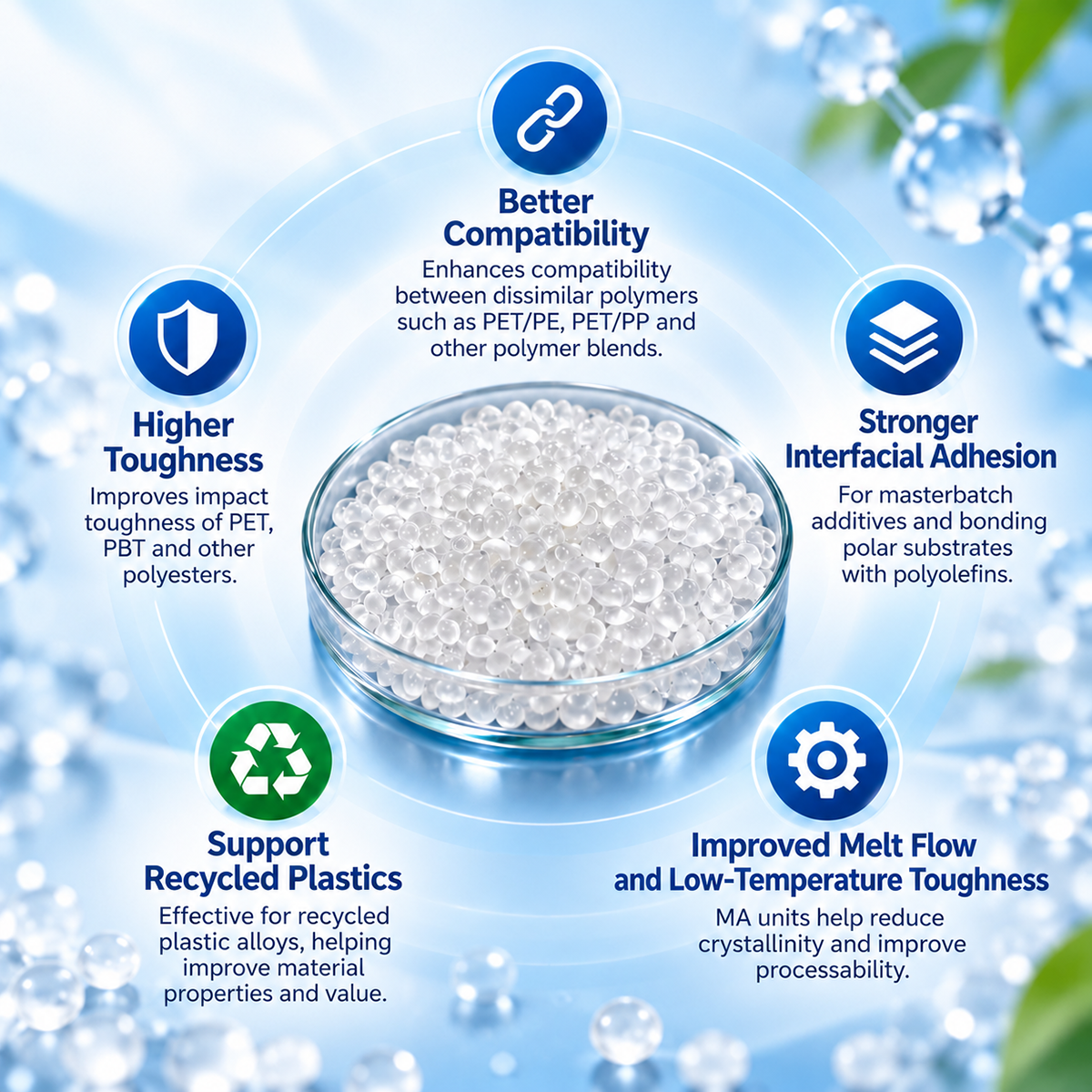
1. Reactive Compatibilization for Polymer Blends
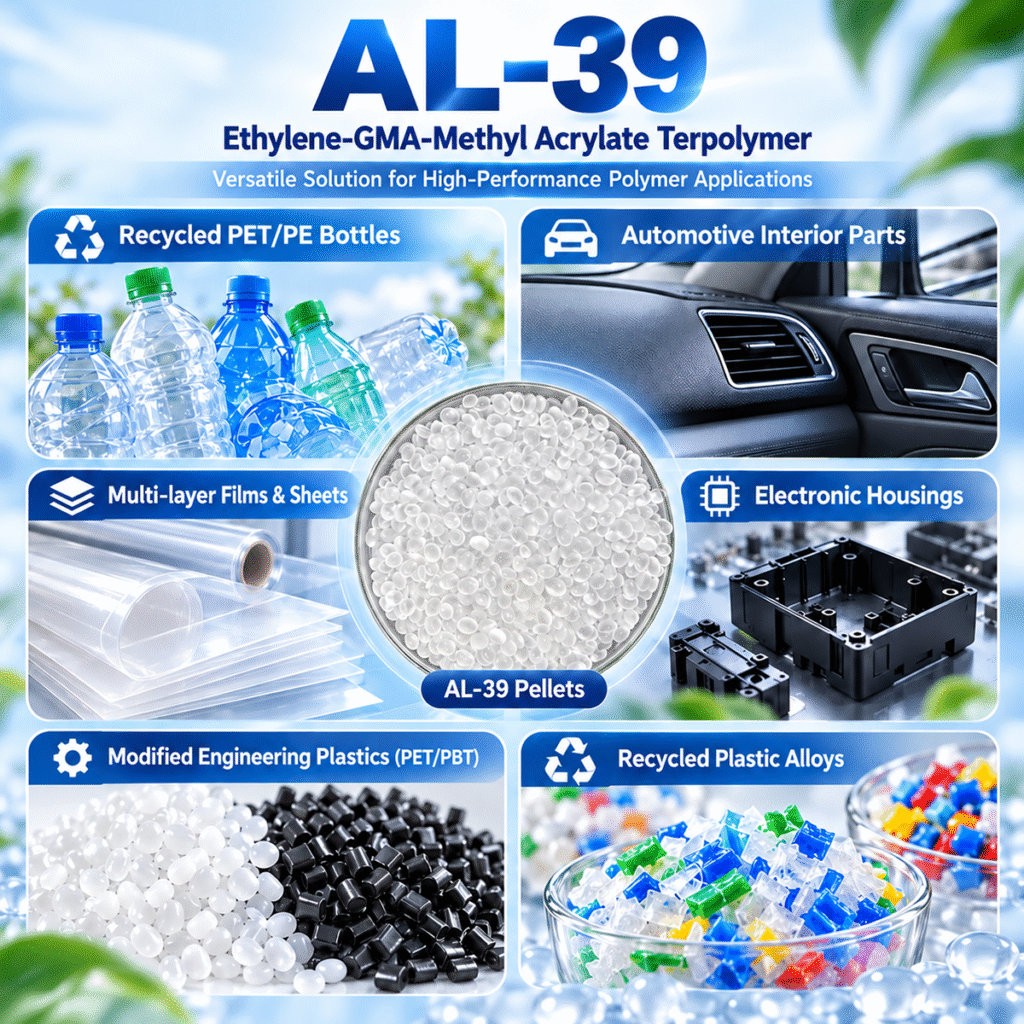
Improves compatibility and interfacial bonding between polyolefins and polar polymers, helping produce more uniform polymer blends.
2. Effective Impact Modification and Toughening
Designed to improve toughness and impact performance in polymer systems, particularly for polyester materials such as PET and PBT.
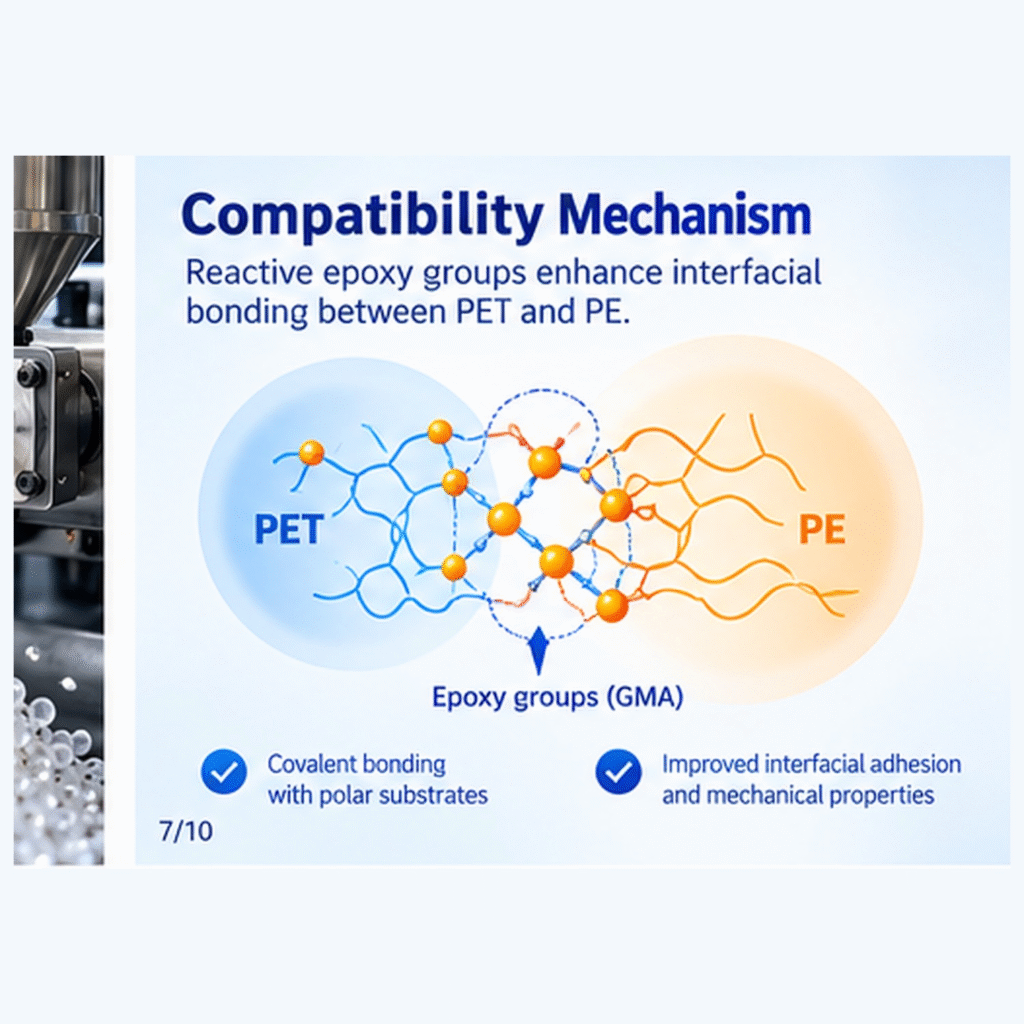
3. Reactive Epoxy Functional Groups
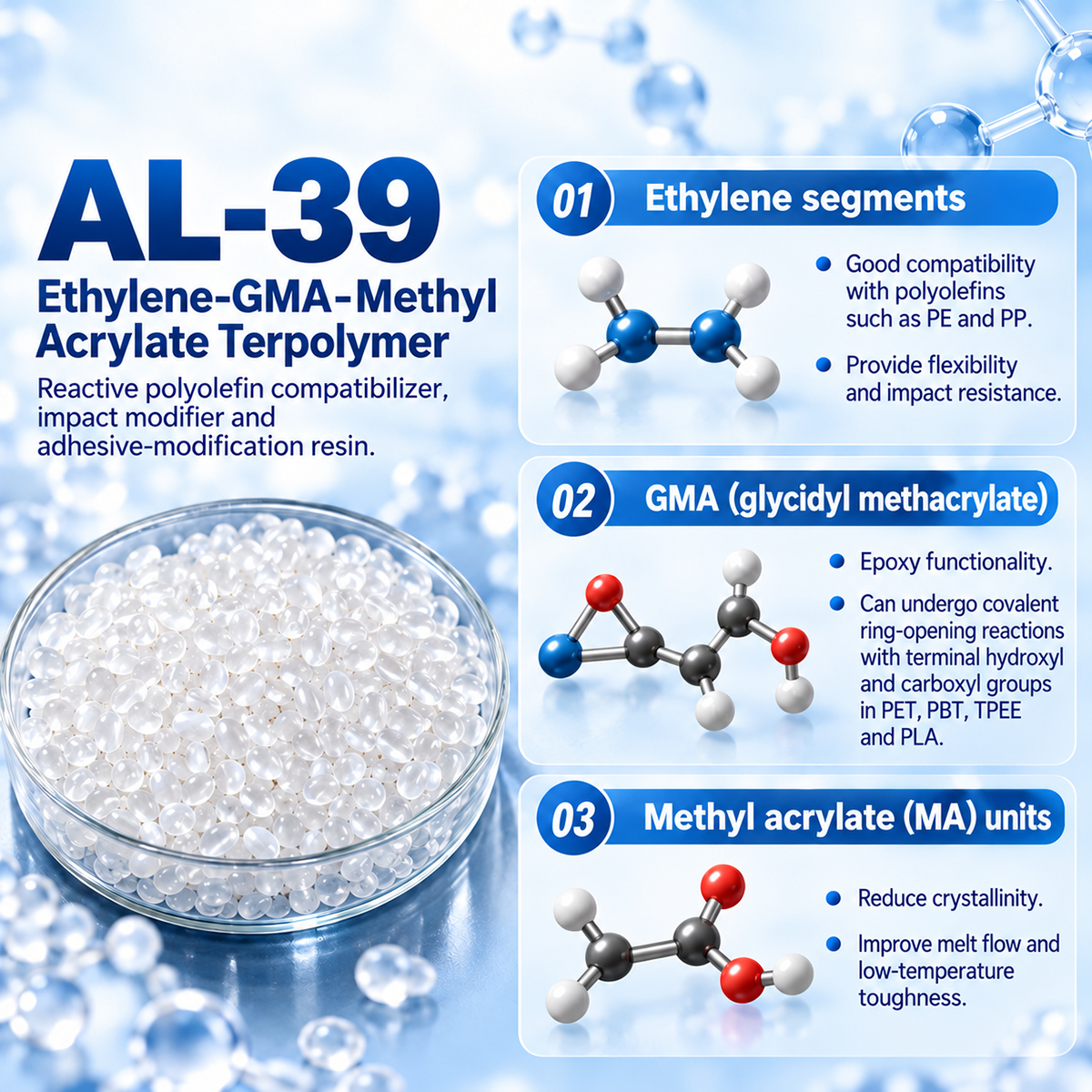
GMA epoxy groups can react with terminal hydroxyl and carboxyl groups in compatible polymers, supporting stronger interfacial bonding and improved blend performance.
4. Suitable for Recycled Plastic Alloy Modification
Helps improve compatibility in recycled polymer blends, including selected PE/PP-based systems, supporting the development of better-performing recycled plastic alloys.
5. Versatile for Polymer Compounding and Adhesion Applications
Suitable for polymer blending, polyester modification, and selected extruded tie-layer applications requiring improved interfacial adhesion between different materials.
FAQ:
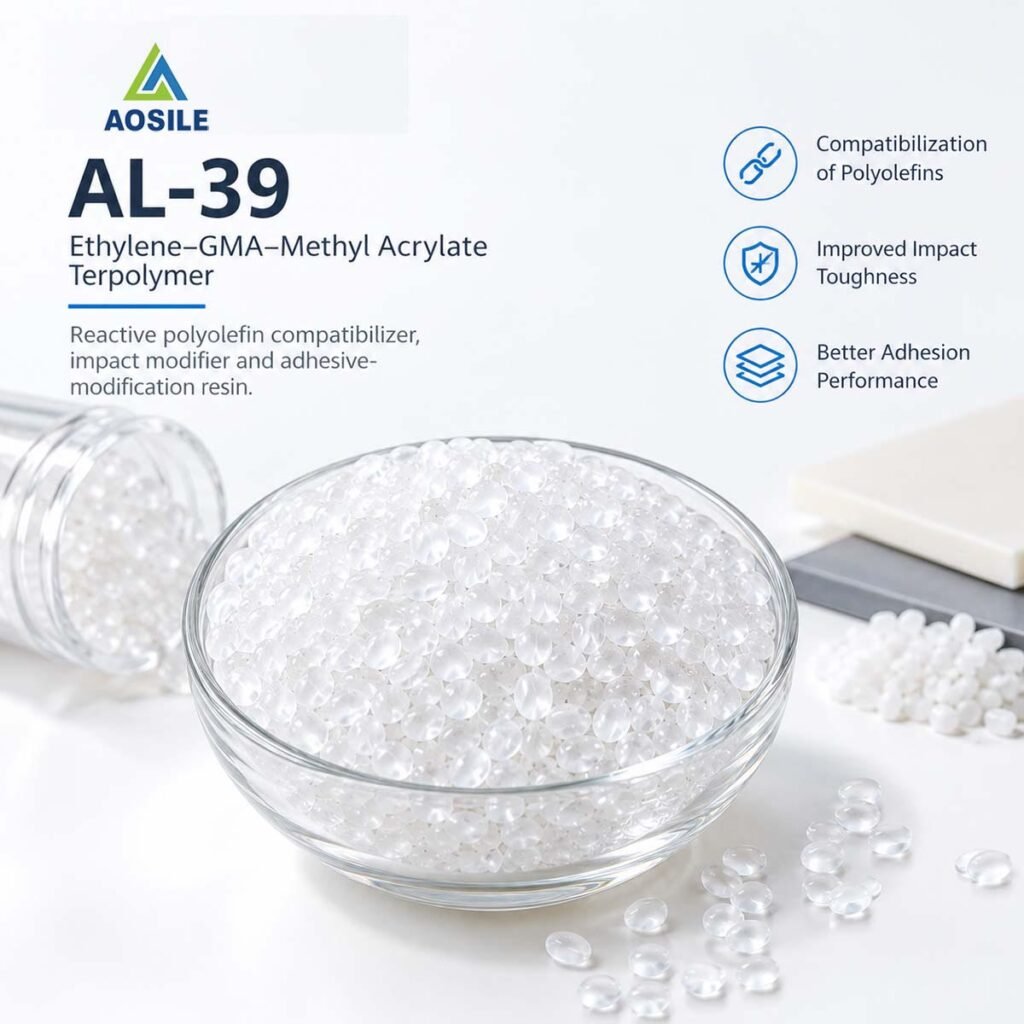
Q1: What is AL-39 Ethylene GMA MA Terpolymer used for?
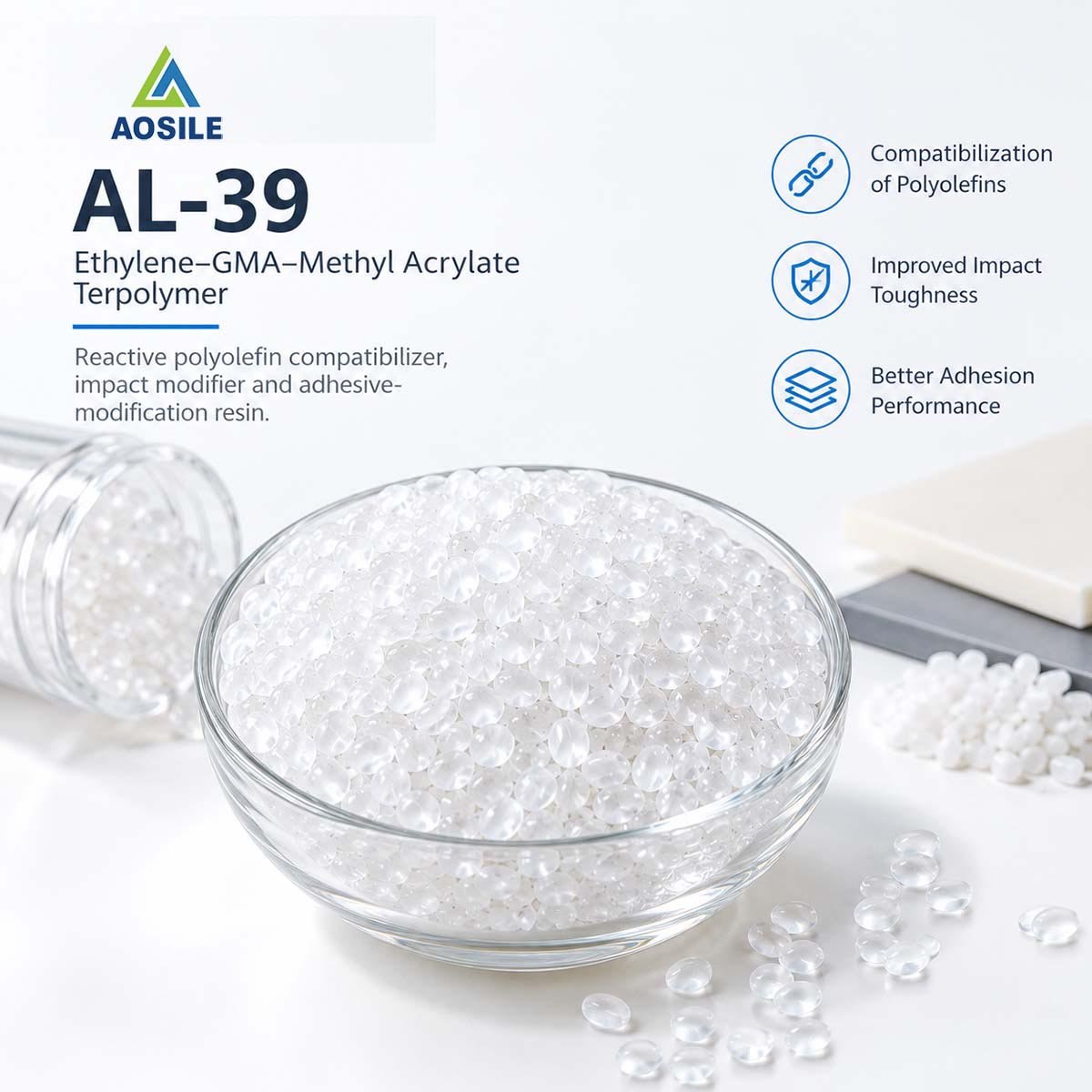
A: AL-39 is a reactive polymer compatibilizer and modifier used for polymer blend compatibilization, PET/PBT toughening, recycled plastic alloy modification, and selected adhesion or tie-layer applications.
Q2: Can AL-39 improve compatibility between PE and PET?
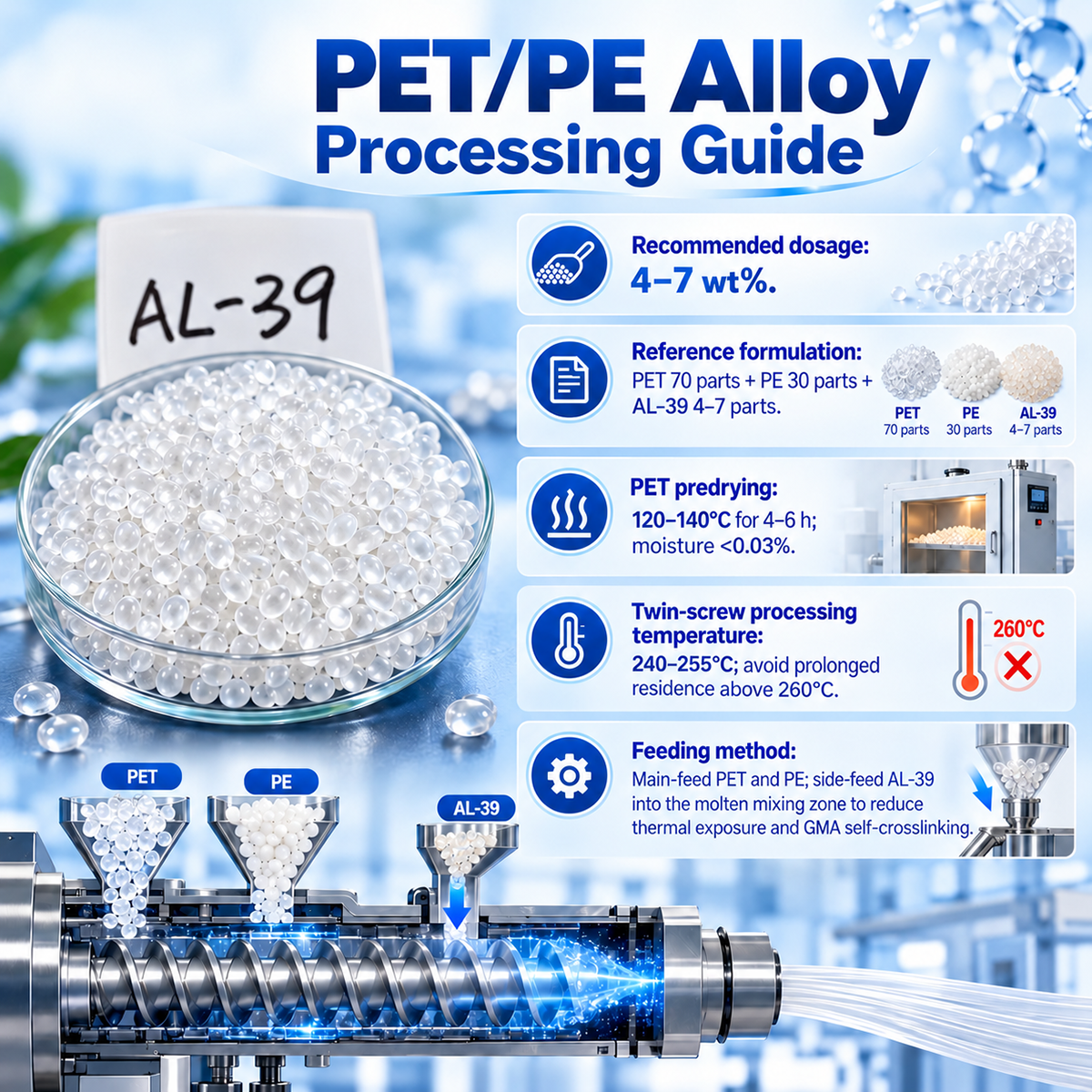
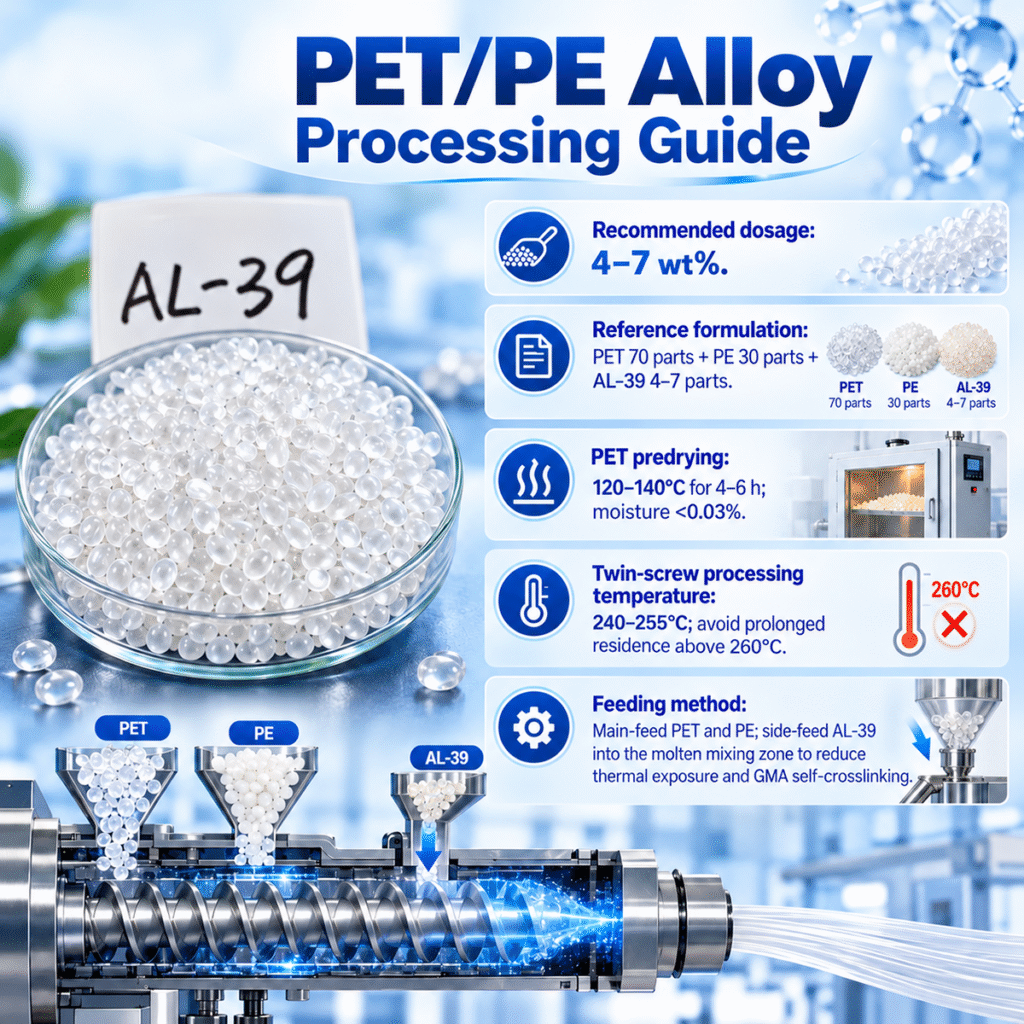
A: Yes. AL-39 is designed to improve interfacial compatibility in selected PE/PET blends. A typical starting dosage is 4–7 wt%, depending on the formulation and required performance. Trials are recommended to determine the optimum dosage.
Q3: Is AL-39 suitable for PET and PBT toughening?
A: AL-39 can be used as a reactive modifier for polyester systems, including PET and PBT. Its epoxy functional groups can react with terminal hydroxyl or carboxyl groups, helping improve interfacial bonding and blend performance. Results depend on the formulation and processing conditions.
Q4: Can AL-39 be used in recycled plastic materials?
A: Yes. AL-39 can be evaluated as a compatibilizer for selected recycled plastic blends and polymer alloys, helping improve compatibility between different polymer phases. The recommended dosage should be confirmed through processing trials.
Q5: What are the processing and storage recommendations for AL-39?
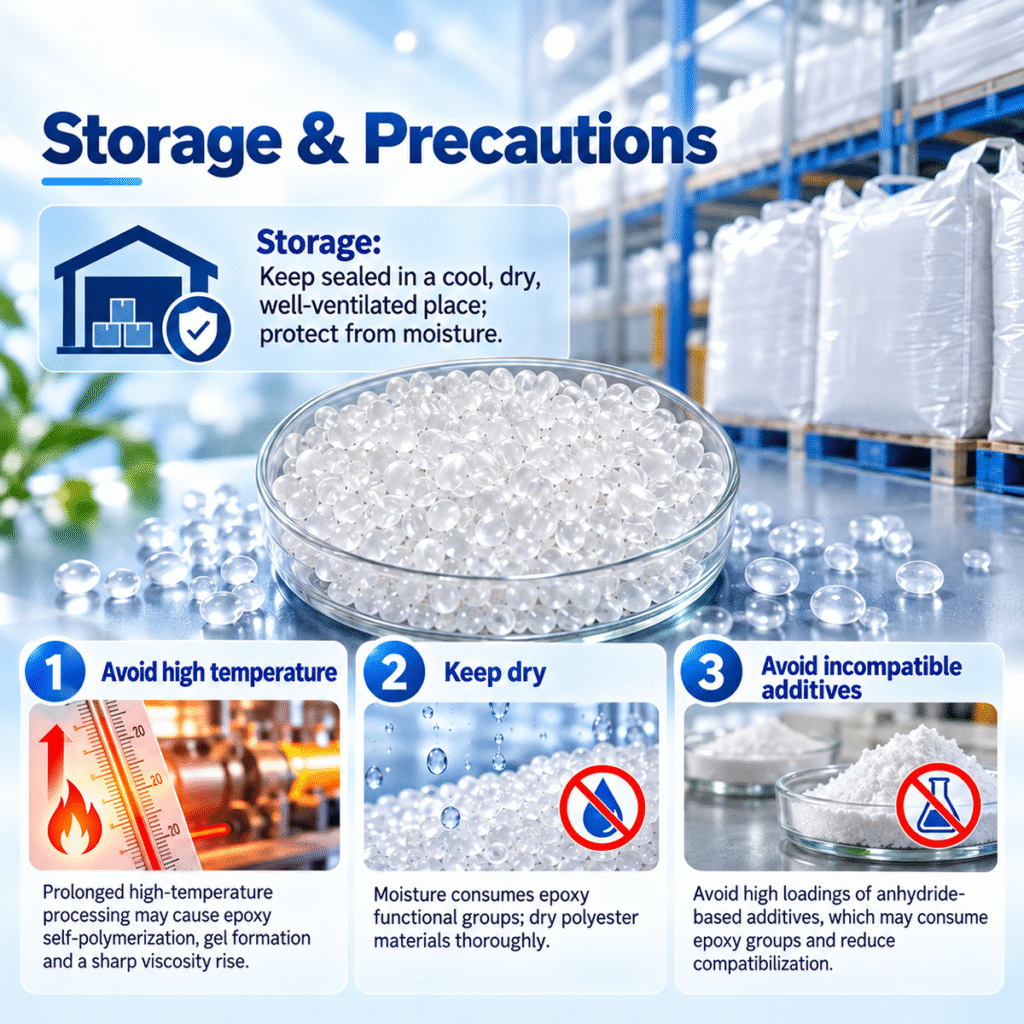
A: For PET/PE blend applications, a typical starting dosage is 4–7 wt%. PET should be predried at 120–140°C for 4–6 hours, with moisture below 0.03%. A suggested twin-screw processing temperature is 240–255°C; avoid prolonged exposure above 260°C. Store AL-39 in a sealed package in a cool, dry, well-ventilated place.


Reviews
There are no reviews yet.